
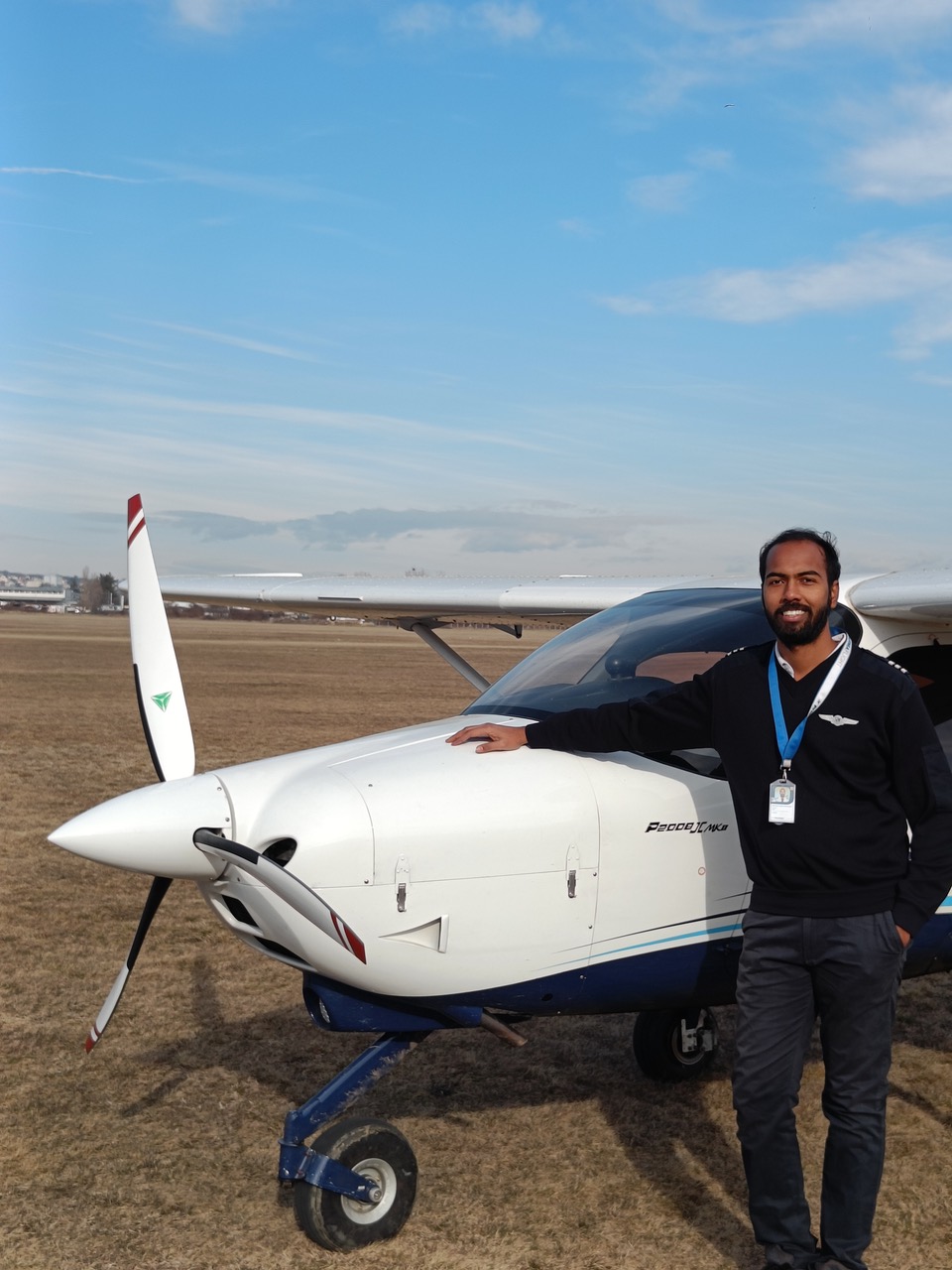
Passion, dedication and hard work
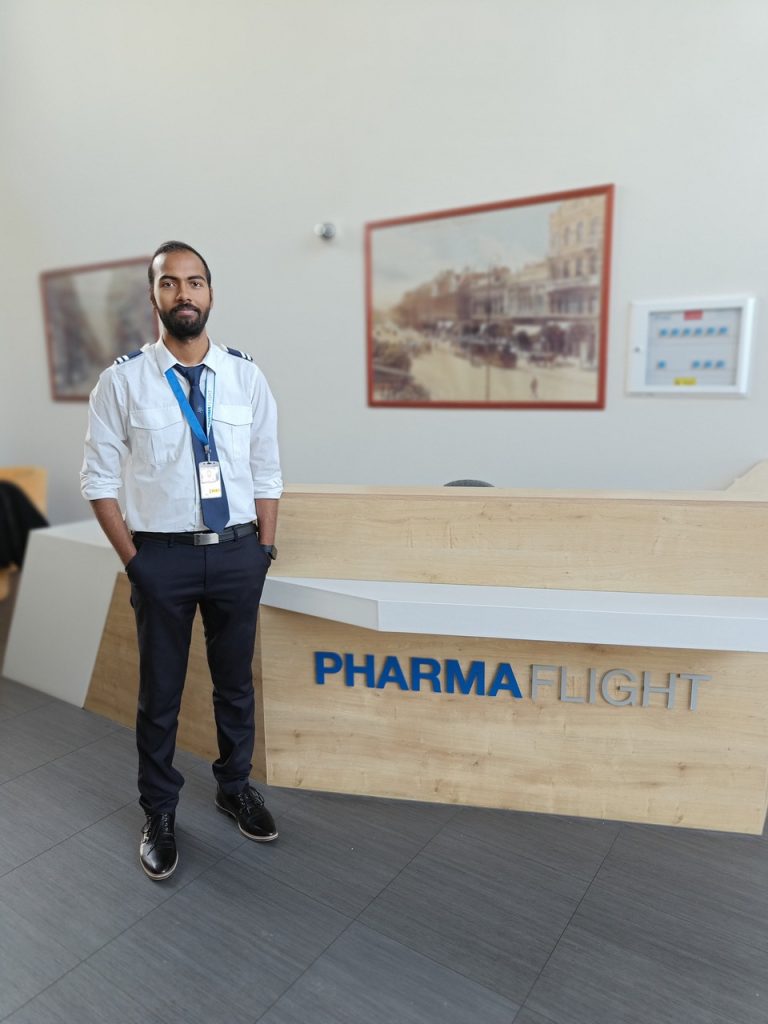
Over the past few years, more than 200 pilot students from 40 countries around the world have graduated from the Pharmaflight Aviation Academy pilot training centre, having earned their EASA CPL and Airbus A320 type ratings. Upon completing their training, the top-performing students were given the opportunity to remain with the academy and continue working as flight instructors. Sabarees Muthuveerannan came to Debrecen from India and is among those who, following the successful completion of the EASA CPL course, remained at Pharmaflight Aviation Academy as an instructor pilot. After more than six years, he has now moved on, having been given the opportunity to become an airline pilot, in line with his original plan.
– Why did you want to become a professional pilot?
– It was my dream from a very young age. Although I knew very little about the aviation industry in the beginning, the more I learned about it over time, the more passionate I became. Today, what attracts me most to this profession is the immense responsibility it carries. There is an incredible feeling of pride and satisfaction in knowing that you are entrusted with the safe operation of such a sophisticated aircraft and the lives of everyone on board.
– Did you have any aviation-related background before you decided to apply to the professional pilot program?
– No, I did not have any aviation-related background before joining the professional pilot program. The only exposure I had was attending a one-day aeromodelling workshop, where we built an RC (Radio Controlled) aircraft as part of a team. Apart from that, I had no prior experience in aviation.
– How did you find Debrecen and Pharmaflight Aviation Academy?
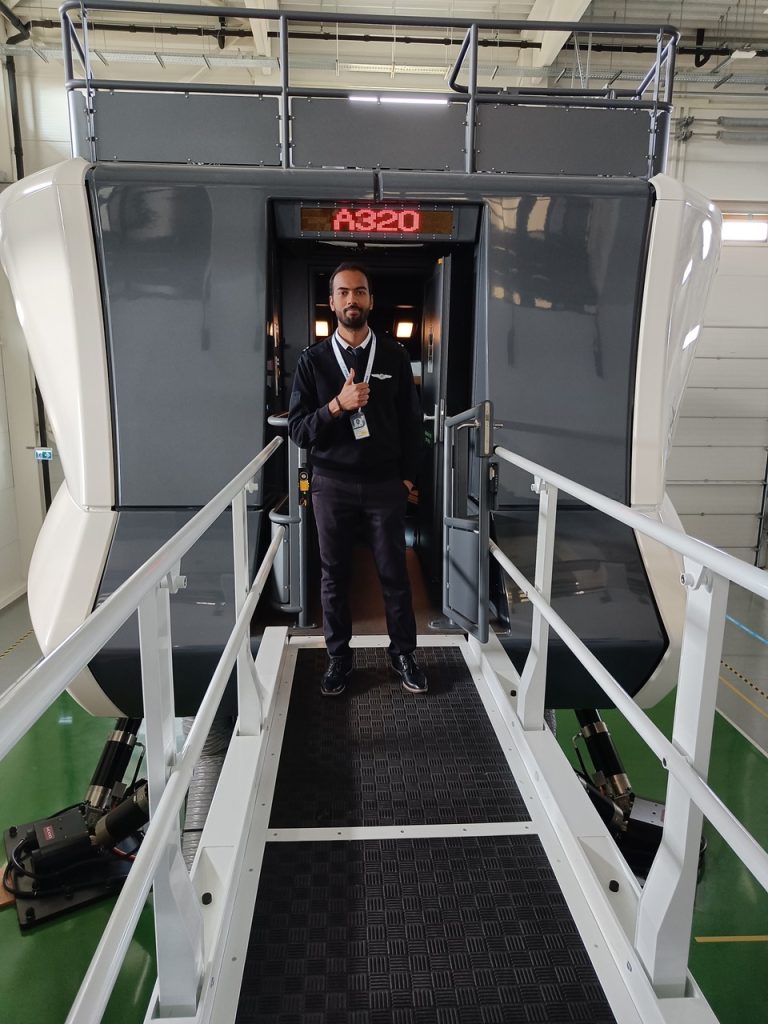
– I found Debrecen to be a very safe, peaceful, and student-friendly city with fewer distractions, making it an ideal place to focus on studies and flight training. It has all the necessary facilities and amenities for a comfortable student life. Being home to more than 5,000 international students from over 100 countries, it also offers a diverse and welcoming environment. Pharmaflight Aviation Academy has a variety of simulators, including A320 Level D FFS and comfortable classrooms with professional instructors from different countries.
– Which theoretical subject was your favourite one?
– I enjoy solving problems, so my favourite theoretical subjects were General Navigation, Mass and Balance, and Flight Planning. I found these subjects particularly interesting because they required logical thinking and practical application, which made them both challenging and rewarding
– How did you manage the 13 ATP theoretical subjects and which was the most easier and difficult subject?
– Since I was already 22 years old when I started the course, I was able to manage my time and studies in a disciplined manner. However, completing all 13 ATPL theoretical subjects still required complete dedication and consistent effort. I devoted most of my time each day to studying and preparing for the exams. I also sought advice from senior students on how to approach the subjects and the examinations, which proved to be very helpful. Personally, I found Operational Procedures to be the most difficult subject because it involved more memorization than conceptual understanding.
– Which part of the flight training did you like most?
– I liked the multi-engine, Instrument Rating, and A320 type rating parts the most because they were challenging and demanded more from me. I took them as a challenge and tried my best to perform well.
– Which simulator and sim session did you like most?
– I really loved flying in the Airbus A320 full flight simulator. The feeling of touching the controls and switches was very nice. Whenever I entered the simulator, it was a great feeling.
– How did you like the atmosphere in Debrecen and in the academy?
– I really enjoyed my time in Debrecen and at the academy. Everyone was friendly, helpful, and easily approachable, creating a welcoming and supportive environment. I especially appreciated the open culture, where there was very little authority gradient, making communication easy and encouraging collaboration. Overall, it was a very positive and conducive environment for both work and personal growth.
– Why did you choose to become an instructor pilot and stay in Debrecen after your graduation?
– I always wanted to become an airline pilot, but I ended up becoming an instructor due to the job market. I also chose this so that I could gain more experience before joining the airlines. If I have to comment now, I really like this profession, and it gives me a sense of achievement and satisfaction whenever I see my students progress during their flight training.
– As an instructor pilot, what did you learn during your service?
– It helped me improve my understanding of flying because I got to spend more time observing students fly. It also helped me improve my situational awareness and workload management. Since I had the opportunity to instruct people from more than 20 countries across different age groups, I learned just as much as I taught. It helped me stay grounded and see things from different perspectives.
– What are your advises to the young girls and boys who want to become a professional pilot?
– Think carefully before choosing this profession. Passion, dedication, and hard work are essential, or you won’t survive in this field. It is going to be a challenging journey, but trust me, it is all worth it in the end.
– What helps most to the students to focus the training, especially the theoretical part and the flying lessons?
– First of all, understand the workload and plan your time accordingly. This course is not just something you study – it becomes a way of life. It requires your full commitment and should be your top priority. You need to be prepared to organize everything else around your training. I would also encourage students to develop non-technical skills in their daily lives, such as time management, workload management, discipline, communication, and decision-making. These skills are just as important as technical knowledge and will help you throughout your training and your career.
– How many years did you stay in Hungary and Debrecen all together as a trainee and as an instructor pilot?
– I stayed in Hungary for almost seven years – 6 years and 10 months, to be exact.
– After the years in Debrecen, how many flight hours did you collect?
– I am yet to start flying after leaving Debrecen. As of now, I have accumulated close to 1,000 flight hours.
– How was the conversion of the EASA CPL to the Indian DGCA CPL?
– It was the same as converting any other licence to a DGCA licence, so it was not difficult. However, it is very important to understand the exact requirements in terms of flight hours and documentation. I read a lot of documents on the DGCA website to understand the requirements thoroughly. If you want to save time, you may also get in touch with agents in India who assist with licence conversions.
– What was the most interesting and funny story of your pilot time here in Debrecen?
– I used to ferry the aircraft to a maintenance facility at Benesov airfield, which is near Prague, (Czech Republic) for which I usually transit through Budapest, Vienna, (Austria) and Bratislava (Slovak Republic) airspaces. There are usually airliners flying in these airspaces. It was a surreal experience to fly in the middle of airliners through different landscapes.
– What did you like most during the years that you spent in Hungary and Debrecen?
– Hungary was the first foreign country I ever visited, so everything was a new experience for me. I really enjoyed learning about a different culture and meeting people from all over the world. It was also my first time seeing snow, and experiencing all four seasons – especially the beautiful winters and pleasant summers – was something I will always remember. Living in Debrecen taught me to be independent and appreciate a peaceful lifestyle. Above all, I am grateful for the lifelong friendships I made during my time there.
– What is the next step in your pilot life? – Fortunately, I have secured an airline pilot position, and I am looking forward to this new challenge. Aviation is a profession where continuous learning is essential, and I am excited to study a new aircraft, gain new experiences, and continue growing as a professional pilot.